In New York City, relationships move quickly. Careers accelerate. Social circles expand. Dating apps create endless options. But when trust breaks, everything slows down.
I have worked with clients across NYC and the USA who describe betrayal as a moment where time split into “before” and “after.” Before the discovery. After the discovery. Before the certainty. After the doubt.
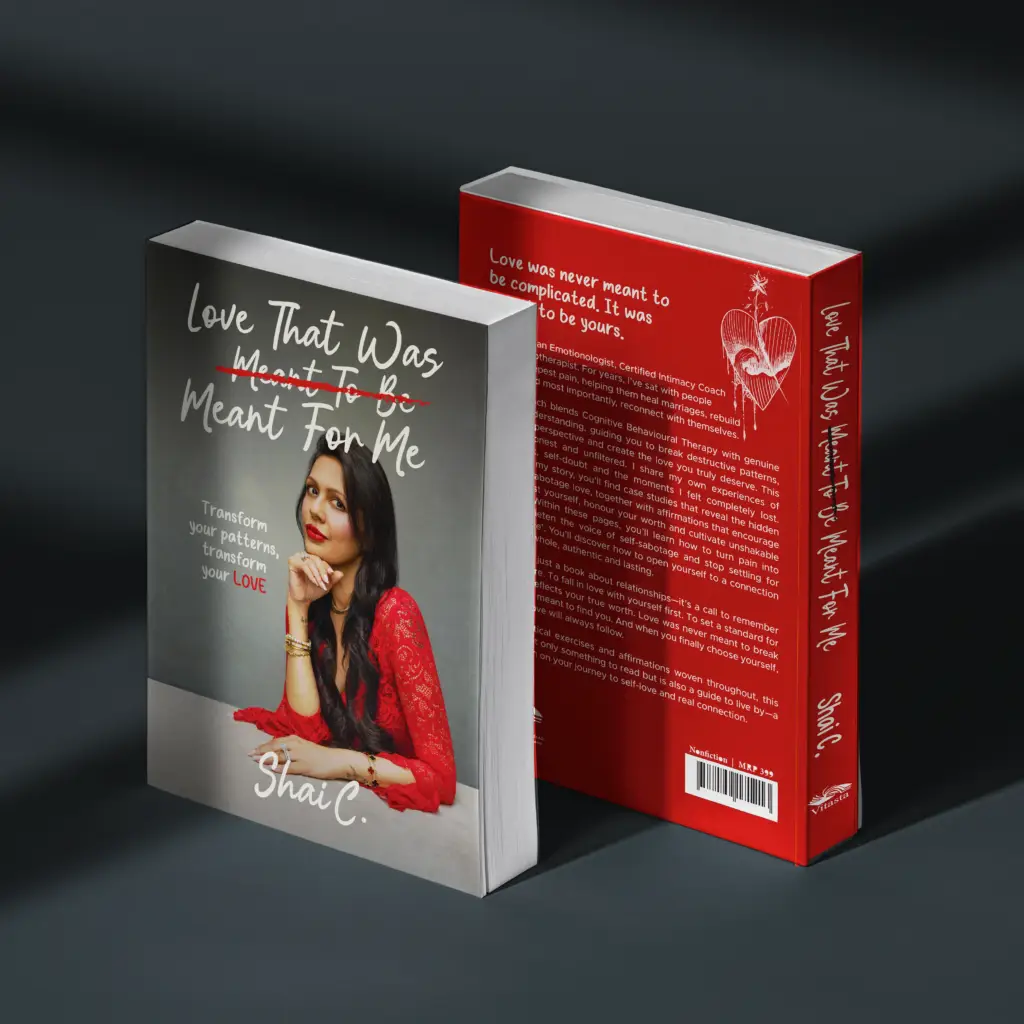
When I wrote Love That Was Meant for Me, I was not trying to write a book about romantic perfection. I was writing about a rupture. About what happens internally when emotional safety collapses. And about how we rebuild not from denial, but from awareness.
If you are here because you are caught in the emotional vs physical cheating debate, let me gently shift the lens: betrayal is not about categories. It is about broken trust.
Why Is the Emotional vs Physical Cheating Debate So Misleading?

In sessions, clients often ask me, “Is emotional cheating worse than physical cheating?”
My answer is consistent: the comparison itself misses the point.
Betrayal is not defined by the type of contact. It is defined by the breach of agreement. Every relationship has spoken and unspoken contracts. When those are violated, safety destabilizes.
Social media simplifies betrayal into labels. Therapy complicates it — in a healthy way.
Through Relationship therapy, I help individuals and couples examine the deeper rupture: What promise was broken? What need was neglected? What boundary was crossed without acknowledgment?
When we focus only on the act, we avoid examining the structure that allowed the rupture to happen.
How Does Trust Actually Function in a Relationship?
Trust is not simply loyalty. It is nervous system regulation in another person’s presence.
When you trust someone, your body relaxes. You sleep peacefully. You do not scan their tone for hidden meaning. Trust creates internal steadiness.
When trust breaks, the nervous system shifts into survival mode. You become hyperaware. You replay conversations. You question your intuition.
Being a Certified Cognitive Behavioral Therapist, I tend to incorporate cognitive instruments to analyze post betrayal distortions in thoughts. The belief that one will never believe anyone ever again, or that it must have been his fault, are thoughts but they are not facts, they are only trauma reactions.
Consistency, transparency, and emotional responsibility help to build trust again. It does not rebuild through grand gestures alone.
Why Does Betrayal Feel Like Trauma?
Because for many people, it is experienced as trauma.
Betrayal disrupts attachment security. It creates emotional shock. It activates earlier wounds.
In my work offering Trauma therapy, I see how betrayal often echoes childhood experiences, emotional unpredictability, inconsistency, abandonment. The pain you feel may not be only about this relationship. It may be about every time your emotional safety felt unstable.
That is why betrayal feels disproportionate. It is rarely just about one event.
Clients often come seeking Help with emotional trauma, believing something is “wrong” with them because they cannot calm down weeks or months later. But healing requires nervous system repair, not self-criticism.
We must first stabilize the body before we intellectualize the situation.
How Does Betrayal Impact Intimacy and Identity?
When trust breaks, three core areas are affected:
Intimacy. Physical closeness may feel unsafe. Emotional openness may shrink. Desire can fluctuate unpredictably.
Identity. Many people say, “I don’t recognize myself.” Confidence feels shaken. Self-doubt grows quietly.
Attachment. Some become hypervigilant. Others emotionally withdraw. Both responses are protective.
In couples work, I often use structured CBT Couples Counseling Services to help partners slow reactive cycles. The partner who broke trust must understand the depth of impact. The partner who was hurt must feel validated without becoming trapped in constant surveillance.
Clients sometimes arrive saying they are searching for the best couple therapy in USA. What they truly seek is clarity — not just reconciliation.
Clarity allows people to decide whether they are rebuilding or releasing.
What Does Real Healing Look Like?
Healing is not forgetting. It is integration.
For individuals, healing involves understanding patterns. Why did this dynamic feel familiar? What boundaries did I override? What fears influenced my decisions?
For couples, healing requires structured accountability. Apologies without behavioral change are hollow. Without understanding, forgiveness is untimely.
In NYC, where life is never a slow process, I frequently offer Emotional Regulation Therapy in NYC to assist clients in coping with the anxiety spikes, intrusive thoughts, and sleep disturbance that occur after betrayal.When children are involved, I step into the role of a Family counselor in NYC to prevent rupture from spreading across generations.
Healing is not linear. It is layered.
Some couples rebuild deeper than before. Others separate with clarity instead of chaos. Both outcomes can represent growth.
Why Did I Write Love That Was Meant for Me?
I wrote the book because I saw too many people defining themselves by someone else’s betrayal.
The book is not about chasing love. It is about choosing yourself within love.
It invites readers to examine emotional patterns without shame. It encourages reflection instead of reaction. It asks you to rebuild trust within yourself before demanding it externally.
If you want to explore it, the book is available here:
https://www.amazon.in/dp/8199171219
It is not prescriptive. It is reflective.
How Do We Move Beyond Social-Media Narratives?
Social media offers quick takes. Therapy offers depth.
Online debates push you to choose sides. Healing invites you to examine nuance.
As an Emotionology practitioner USA, my work sits at the intersection of emotional literacy and relational responsibility. I guide clients across NYC, the USA, and internationally toward clarity not judgment.
My goal is not to tell you whether to stay or leave. My role is to help you understand yourself enough to make that decision consciously.
That is empowerment.
A Grounded Reflection to Close
If you are reading this after discovering something that shook your relationship, pause.
You are not weak for feeling destabilized. You are responding to rupture.
When trust breaks, the path forward is not found in debates about emotional versus physical categories. It is found in understanding safety, attachment, and accountability.
Healing starts within; whether it is Relationship Therapy, structured trauma work or personal reflection.
One has to build trust initially with oneself.
And when that inner stability sets back in place, your judgments, your choices in love, in boundaries, in the future, will be less reactive and more consistent.
For ongoing reflections on emotional wellness and relational clarity, you can follow my professional platforms through Shai C Consultancy.
Since when trust is destroyed, the greater narrative is not that of what you lost.
It concerns what you will become when you make the decision to heal.
To continue reflecting on relationships, emotional healing, and trauma-informed care, you can follow my work on social platforms.
Get more thoughts and healing resources and talk about emotional intimacy and empowerment with me on Instagram and on Youtube.